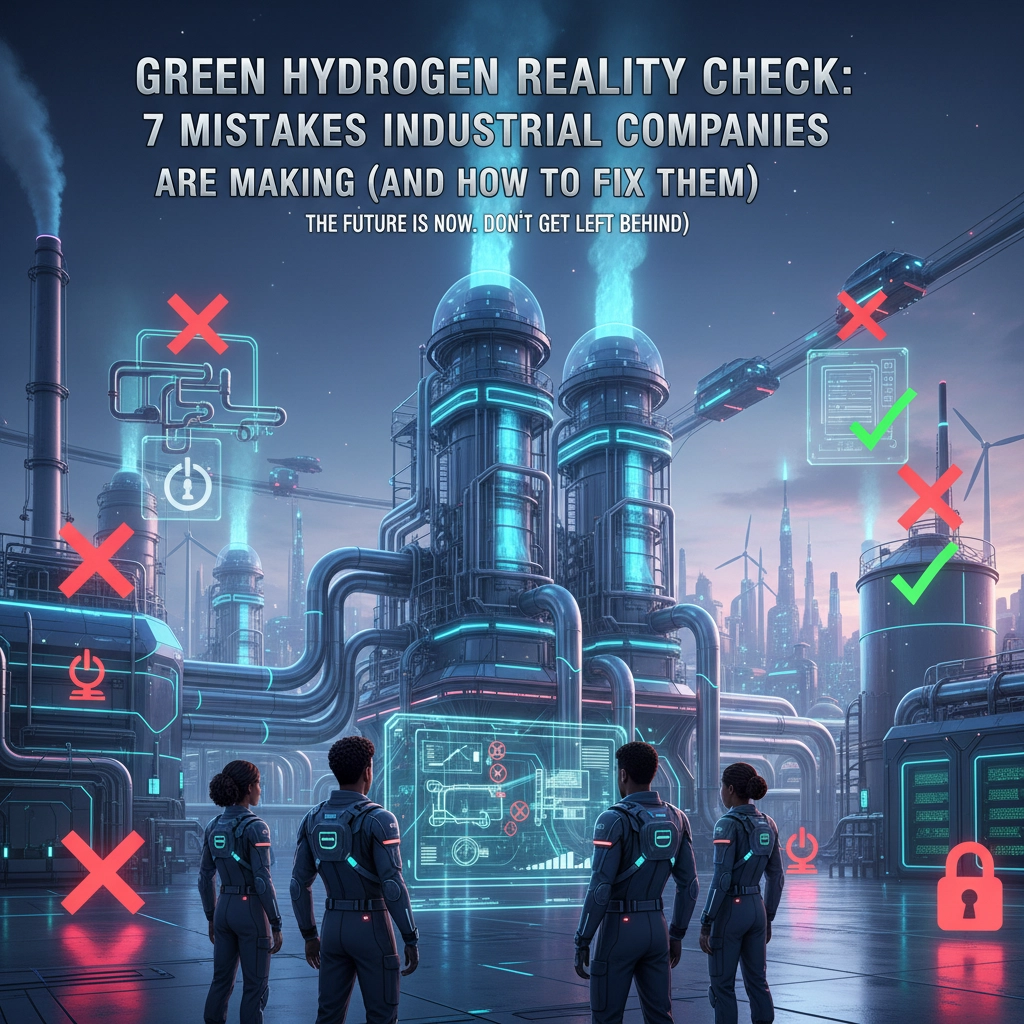
Green Hydrogen Reality Check: 7 Mistakes Industrial Companies Are Making (And How to Fix Them)
Green hydrogen is having its moment. Everyone's talking about it as the clean fuel of the future, and industrial companies are scrambling to get on board. But here's the thing: a lot of these initiatives are hitting walls, burning through cash, or straight-up failing because companies are making some pretty fundamental mistakes.
At MWEnergy, we've been in the trenches with industrial clients navigating this space, and we keep seeing the same errors over and over again. The good news? These mistakes are totally fixable if you know what to look for.
Mistake #1: Treating Green Hydrogen Like It's Already Cost-Competitive
This is the big one. Too many companies are jumping into green hydrogen projects assuming the economics will just "work themselves out." Reality check: green hydrogen is currently 2-3 times more expensive than fossil-fuel-based hydrogen. That's not a small gap you can handwave away.
The Fix: Get real about your cost modeling. Factor in long-term renewable electricity prices, potential economies of scale, and what financial support is actually available (not just promised). Start with pilot projects rather than betting the farm on massive installations. The costs will come down, but you need a bridge strategy to get there.

Mistake #2: Using Hydrogen for Power Generation
This one makes our engineers cringe every time. Companies are looking at hydrogen as a way to generate electricity, but here's the physics problem: you lose 50-80% of your energy in the round trip from electricity to hydrogen and back to electricity. It's like taking a $100 bill, turning it into quarters, then trying to buy something that costs $80.
The Fix: Focus hydrogen on applications where it actually makes sense: heavy industry like steel, cement, chemicals, and long-haul transportation. These sectors already use millions of tons of fossil-derived hydrogen and represent the best near-term opportunities. Save the power generation for sectors where you don't have better alternatives.
Mistake #3: Playing the Color Game Without Checking the Math
Everyone's obsessed with hydrogen colors: green, blue, grey: but two "green" hydrogen supplies can have completely different carbon footprints depending on how they're actually produced and delivered. It's like judging a book by its cover and ignoring what's inside.
The Fix: Ditch the color coding and focus on actual carbon intensity metrics. Look at the full supply chain: where's the electricity coming from? How much methane is leaking from the natural gas system? What's the real capture rate on that carbon capture system? Get cradle-to-gate emissions accounting, not marketing slogans.

Mistake #4: Banking on Policies That Don't Exist Yet
We've seen too many projects collapse because companies couldn't secure long-term hydrogen supply at competitive prices. Why? Because the regulatory framework is still a moving target. Companies are making multi-million dollar bets on policies that might change next year.
The Fix: Engage with policymakers now to help create the frameworks you need. Advocate for consistent standards, carbon pricing that actually works, and infrastructure development policies with visibility beyond your typical 3-year planning cycle. Don't just wait for perfect policy: help create it.
Mistake #5: Accepting Terrible Deal Structures
Here's a structural problem that's killing projects: hydrogen producers want 10-20 year offtake agreements that dump all the risk on industrial customers. It's like signing a 20-year contract to buy smartphones at today's prices when we know they'll get cheaper and better.
The Fix: Push for balanced risk-sharing in your contracts. Structure deals with flexibility for cost reductions over time. Tie long-term agreements to actual performance improvements, not just fixed rates. If producers want long-term certainty, they need to share in the downside risk too.

Mistake #6: Falling for "Hydrogen Washing"
Some companies are gaming the system by creating power-to-hydrogen-to-power cycles that capture subsidies on both ends while providing zero real value. It's like running money through a laundromat: you're moving cash around, but you're not actually cleaning anything.
The Fix: Design your hydrogen strategy around genuine end-use value, not subsidy optimization. Be transparent about your supply chain and emissions. Accept that real decarbonization might be more expensive than subsidy arbitrage, but it's also more sustainable long-term.
Mistake #7: Announcing Big Without Planning Real
The "implementation gap" is real. Companies announce massive hydrogen projects with great fanfare, then quietly scale them back or cancel them when reality hits. It's the corporate equivalent of promising to run a marathon without training for it.
The Fix: Think clusters, not highways. Instead of trying to build isolated hydrogen infrastructure, focus on integrated industrial zones where multiple companies can share costs and infrastructure. Invest in workforce training and genuine stakeholder buy-in. Build market demand methodically rather than assuming it'll appear magically.

The Path Forward: Getting Hydrogen Right
Look, green hydrogen isn't going away. The technology is real, the climate benefits are substantial, and the economics are improving. But success requires getting past the hype and focusing on what actually works.
The companies winning in this space are the ones taking a pragmatic approach: starting with applications where hydrogen has genuine advantages, building robust supply chains with transparent emissions accounting, and creating financing structures that share risk appropriately.
At MWEnergy, we're helping industrial companies navigate exactly these challenges. Whether you're looking at hydrogen solutions for heavy industry, exploring integrated renewable energy strategies, or trying to figure out how hydrogen fits into your broader industrial energy strategy, we've got the experience to help you avoid these costly mistakes.
The hydrogen economy is coming, but it's going to look different than the hype suggests. Companies that focus on real applications, honest economics, and sustainable business models will be the ones capturing the value. Everyone else will be left holding expensive lessons learned.
Ready to explore how green hydrogen might fit into your industrial energy strategy? Let's talk about building something that actually works.