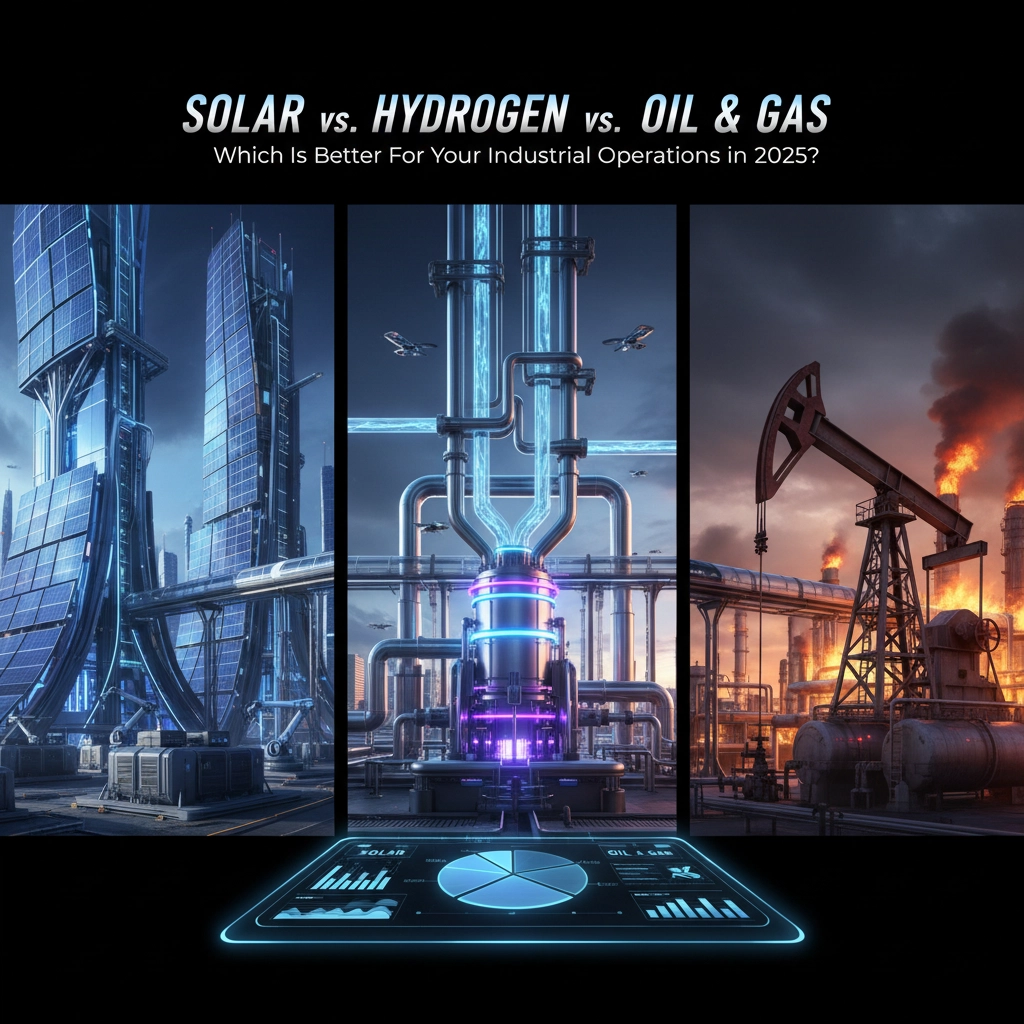
Solar vs. Hydrogen vs. Oil & Gas: Which Is Better For Your Industrial Operations in 2025?
Choosing the right energy strategy for your industrial operations in 2025 isn't just about keeping the lights on anymore: it's about future-proofing your business while managing costs and meeting sustainability goals. With energy markets shifting faster than ever, you're probably wondering: should you stick with reliable oil and gas, make the leap to solar, or bet on hydrogen as the next big thing?
The truth is, there's no one-size-fits-all answer. Your best industrial energy solutions depend on your specific operations, location, budget, and long-term goals. Let's break down each option so you can make an informed decision that works for your business.
Solar Energy: The Proven Game-Changer
Solar has come a long way from being an expensive green statement. In 2025, it's become one of the most cost-effective sustainable business power options available, especially for facilities with decent roof space or land availability.

Why Solar Makes Sense
Cost Savings That Actually Matter
Once your solar system is installed, your operational costs drop dramatically. We're talking about electricity costs that can be 70-80% lower than traditional grid power in many regions. The maintenance? Minimal. Most systems just need occasional cleaning and basic upkeep.
Quick Deployment
Unlike other energy transitions that can take years, solar installations can be up and running in months. For businesses that need to show results quickly, solar delivers.
Scalability on Your Terms
Whether you're running a small manufacturing facility or a massive industrial complex, solar scales to match your needs. You can start small and expand as your energy requirements grow or as your budget allows.
The Solar Reality Check
Weather Dependency
Let's be honest: solar only works when the sun shines. Cloudy days and winter months can significantly impact your energy production. This means you'll likely need battery storage systems or backup connections to the grid, which adds to your upfront costs.
Upfront Investment
The initial capital requirement can be substantial. Even with financing options and government incentives, you're looking at a significant investment before you see any returns.
Space Requirements
Industrial-scale solar installations need space: lots of it. If you're in an urban area with limited roof space or high real estate costs, solar might not be practical.
For businesses ready to explore solar solutions, understanding your specific site conditions and energy needs is crucial to making this transition work.
Hydrogen: The Industrial Wild Card
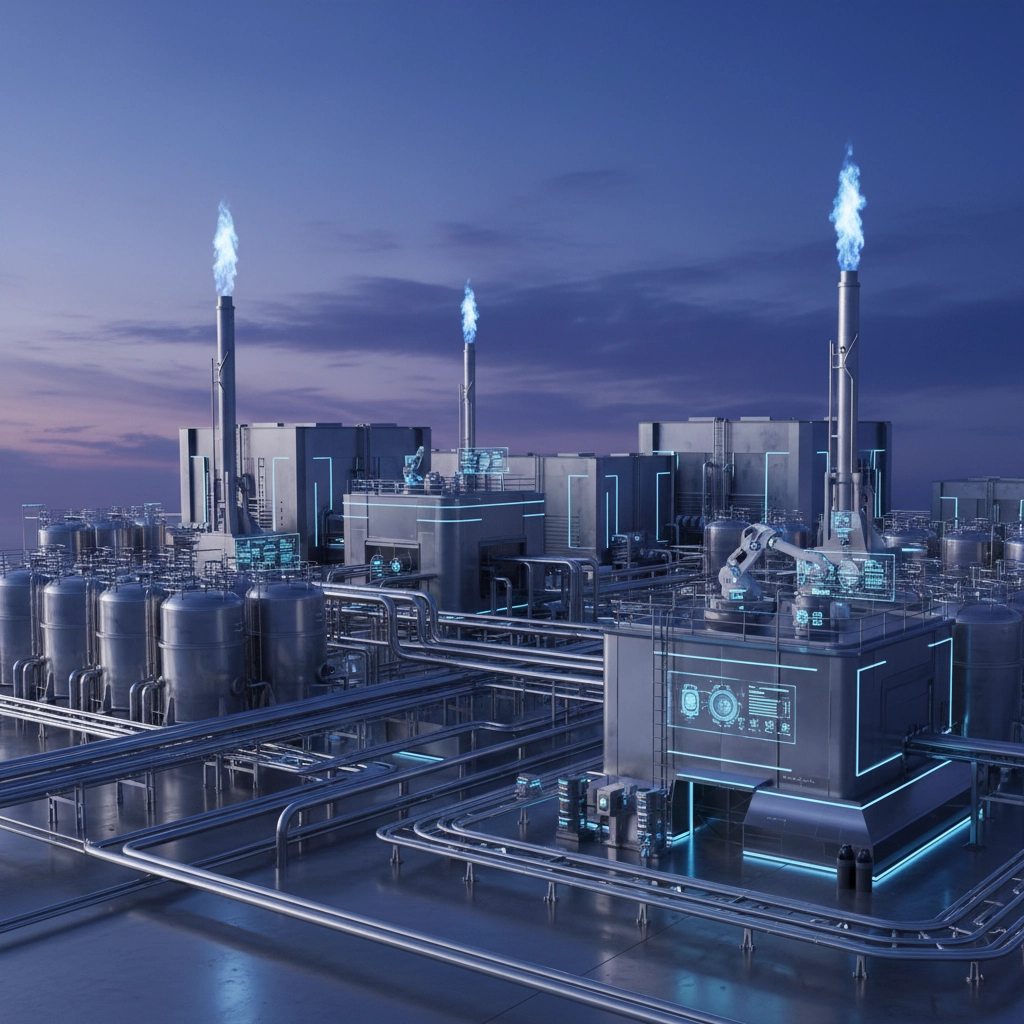
Hydrogen is the energy source everyone's talking about, and for good reason. It offers unique advantages for heavy industrial operations that other renewable sources simply can't match.
Hydrogen's Industrial Advantages
High-Temperature Process Compatibility
Unlike solar or wind, hydrogen can provide the high-temperature heat needed for steel production, chemical manufacturing, and other heavy industrial processes. This makes it particularly attractive for operations that can't easily electrify.
Energy Storage Powerhouse
Hydrogen acts as both fuel and energy storage solution. You can produce it when renewable energy is abundant and cheap, then use it when you need it: day or night, rain or shine.
Long-Distance Transport
If your operations are spread across multiple locations, hydrogen can be transported more efficiently than electricity over long distances.
The Hydrogen Hurdles
Cost Reality
Green hydrogen (produced using renewable electricity) is still expensive: typically 2-3 times more costly than natural gas. While prices are dropping, they're not competitive with fossil fuels yet in most applications.
Infrastructure Gaps
Unlike oil, gas, or electricity, hydrogen infrastructure is still developing. You might need to invest in specialized storage, handling equipment, and safety systems.
Efficiency Losses
Converting electricity to hydrogen and back to useful energy involves significant efficiency losses: sometimes up to 70% of the original energy is lost in the process.
Early-Stage Technology
While hydrogen isn't new, many industrial applications are still in the demonstration phase. You'll be taking on more technological risk compared to proven alternatives.
Companies interested in hydrogen energy solutions should consider pilot projects before committing to large-scale transitions.
Oil & Gas: The Reliable Workhorse
Despite all the talk about renewable energy, oil and gas remain the backbone of global industrial operations. They offer unmatched reliability and energy density that's hard to replace.
Why Oil & Gas Still Dominate
Proven Reliability
When you need consistent, high-energy output regardless of weather conditions, oil and gas deliver. No storage systems, no weather dependency: just reliable energy when you need it.
Existing Infrastructure
The infrastructure is already there. Pipelines, refineries, distribution networks, and industrial equipment designed for fossil fuels represent trillions of dollars in existing investment.
Energy Density
Pound for pound, oil and gas pack more energy than almost any alternative. This makes them particularly valuable for energy-intensive industrial processes.
The Growing Challenges
Regulatory Pressure
Environmental regulations are tightening globally. Carbon taxes, emissions limits, and reporting requirements are making fossil fuels more expensive and complex to use.
Price Volatility
Geopolitical tensions, supply disruptions, and market speculation can cause dramatic price swings that make budgeting difficult.
Long-Term Viability
Many countries and regions are actively planning to phase out fossil fuels. Building new infrastructure around oil and gas may not be the smartest long-term bet.
Supply Chain Risks
Recent global events have highlighted how vulnerable fossil fuel supply chains can be to disruption.
Head-to-Head Comparison
| Factor | Solar | Hydrogen | Oil & Gas |
|---|---|---|---|
| Upfront Costs | High | Very High | Moderate |
| Operating Costs | Very Low | Medium-High | Variable |
| Reliability | Weather-dependent | High (with storage) | Very High |
| Environmental Impact | Minimal | Zero (green H2) | Significant |
| Technology Maturity | Proven | Developing | Mature |
| Energy Storage | Requires batteries | Built-in capability | Minimal need |
| Regulatory Support | Strong | Growing | Declining |
| Infrastructure | Developing rapidly | Limited | Extensive |
What's Right for Your Business?
If You Need Immediate Cost Reduction
Go Solar if you have adequate space and decent sunlight. The technology is proven, costs have dropped dramatically, and you'll start seeing savings as soon as your system is operational. Combine this with long-term renewable energy contracts for additional needs.
For Heavy Industrial Processes
Stick with Oil & Gas for now, but start planning your transition strategy. High-temperature industrial processes still rely heavily on fossil fuels, but you can begin incorporating hydrogen for specific applications while maintaining operational continuity.
For Long-Term Competitive Advantage
Think Hybrid. The smartest 2025 energy options combine multiple sources. Use solar for standard electrical loads, hydrogen for high-temperature processes and energy storage, and maintain fossil fuel backup for critical operations.
For Budget-Conscious Operations
Consider Power Purchase Agreements (PPAs) for renewable energy. These contracts provide price stability without requiring major capital investment, letting you access clean energy while you develop longer-term infrastructure plans.

Building Your Energy Strategy for Industry
The energy landscape in 2025 rewards flexibility and strategic thinking. Rather than putting all your eggs in one basket, successful industrial operations are developing diversified energy portfolios that can adapt to changing costs, regulations, and technology developments.
Start by conducting an energy audit of your operations. Identify which processes could easily switch to renewable sources and which require specialized solutions. Consider your geographic advantages: abundant sunlight for solar, proximity to hydrogen infrastructure, or reliable fossil fuel supplies.
Most importantly, don't wait for the "perfect" solution. The companies that thrive in the evolving energy landscape are those that start making smart transitions now while maintaining operational flexibility.
The question isn't really "solar vs hydrogen vs oil": it's how to combine these industrial energy solutions in a way that keeps your operations competitive, sustainable, and profitable for years to come.
Ready to explore your options? Understanding your specific energy needs is the first step toward building a resilient energy strategy that works for your business.