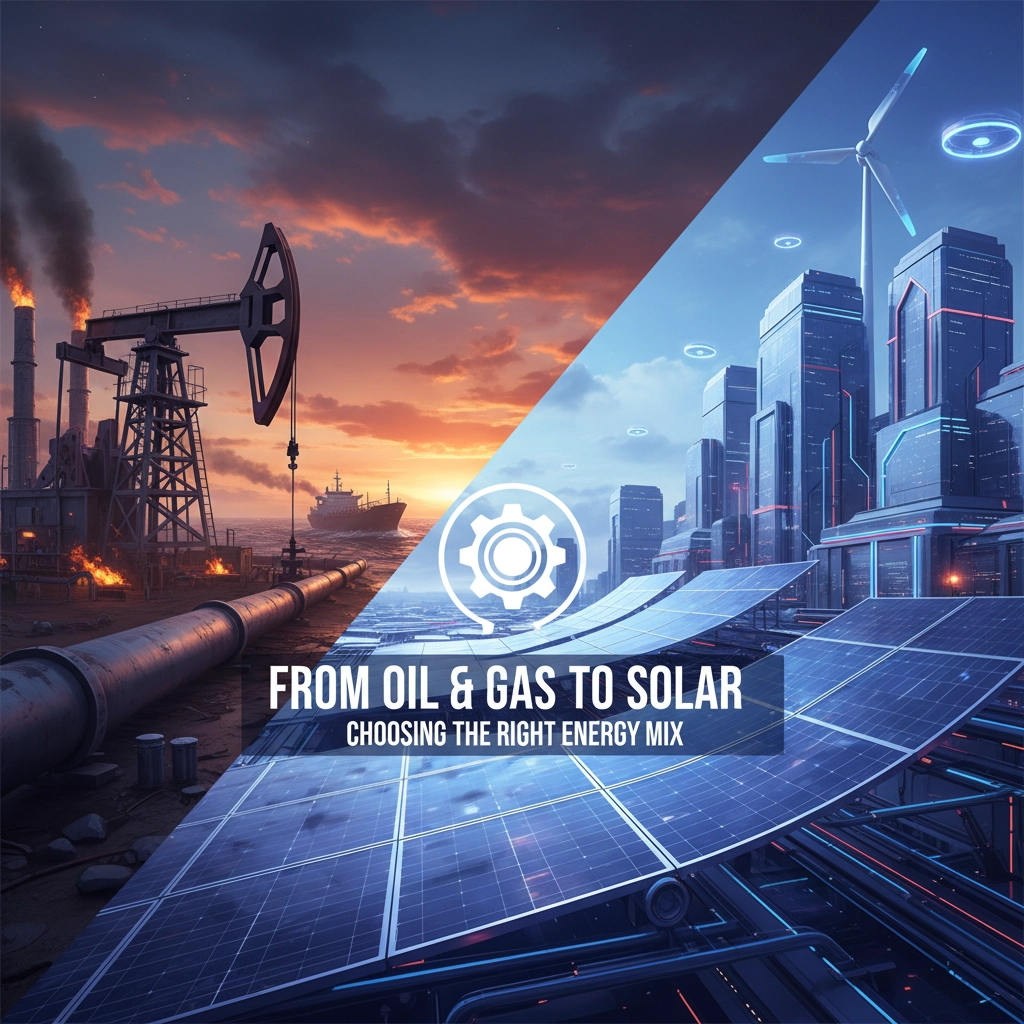
From Oil & Gas Brokering to Solar: Choosing the Right Energy Mix for Your Business
The energy landscape is shifting faster than ever before, and smart business owners are asking the right question: "What's the best energy mix for my company?" Gone are the days when you had to pick just one energy source and stick with it. Today's most successful businesses are creating custom energy portfolios that blend traditional reliability with cutting-edge innovation.
At MWEnergy, we've been helping companies navigate this transition for years. Our diverse portfolio spans everything from traditional oil and gas brokering to pioneering solar power systems, hydrogen technology, and even zero-point energy research. Let's break down how each of these business energy solutions can work for your company.
Understanding Your Traditional Energy Foundation: Oil & Gas Brokering
Let's start with what many businesses know best: oil and gas. Despite all the talk about renewable energy, traditional fossil fuels still power a huge chunk of the business world, and there are solid reasons why.
Oil and gas brokering remains a cornerstone of business energy solutions because it offers something renewable sources are still working to match: consistent, predictable power delivery. When your manufacturing plant needs to run 24/7 or your data center can't afford even a minute of downtime, traditional energy sources provide that rock-solid foundation.
Here's what makes oil and gas brokering attractive for businesses:
- Proven reliability – No weather dependency, no storage concerns
- Established infrastructure – Existing pipelines and distribution networks
- Flexible contracts – Options for spot pricing or long-term fixed rates
- Immediate availability – No installation time or upfront capital investment

However, the landscape is changing. Businesses using traditional energy sources face increasing volatility in fuel prices and growing pressure from customers and investors to reduce their carbon footprint. That's where building a smart energy mix becomes crucial.
Solar Power Systems: Your Gateway to Energy Independence
Solar has moved from "nice to have" to "must consider" for most businesses. The numbers tell the story: solar costs have dropped by 85% since 2010, making it one of the most cost-effective energy sources available today.
Solar power systems for businesses typically range from $0.029 to $0.068 per kilowatt-hour, compared to $0.09 to $0.15 for traditional fossil fuel generation. For energy-intensive operations, this difference can mean thousands in monthly savings.
But solar isn't just about cost savings. It's about energy independence. When you generate your own power, you're not at the mercy of utility rate increases or fuel price spikes. Plus, with federal tax credits and state incentives still available, the financial benefits go beyond just the monthly electric bill.
The key considerations for solar power systems include:
- Available space – Roof or ground-mounted options
- Energy usage patterns – Peak demand times vs. peak production times
- Geographic location – Solar resource availability in your area
- Grid connection – Net metering and backup power options
The Next Frontier: Hydrogen Technology
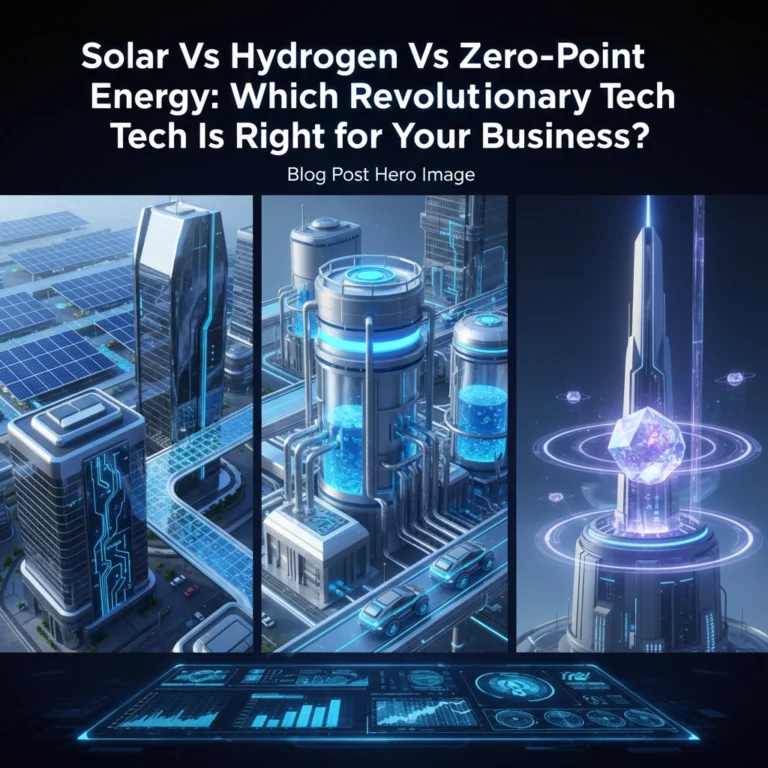
While solar gets most of the headlines, hydrogen technology is quietly revolutionizing how forward-thinking businesses approach energy storage and power generation. Think of hydrogen as the missing link between renewable energy generation and reliable, on-demand power delivery.
Hydrogen offers unique advantages for businesses with high energy demands or specific operational requirements. It can store renewable energy for later use, provide backup power during outages, and even fuel fleet vehicles or industrial processes. Unlike batteries, hydrogen doesn't degrade over time and can provide power for weeks or months if needed.
Industries that are already benefiting from hydrogen technology include:
- Manufacturing facilities needing consistent high-temperature processes
- Transportation companies looking to fuel heavy-duty vehicles
- Data centers requiring reliable backup power systems
- Chemical and steel production where hydrogen is both fuel and feedstock

The technology is advancing rapidly, with costs coming down and efficiency going up. For businesses planning their long-term energy strategy, hydrogen represents a way to bridge the gap between today's reliable fossil fuels and tomorrow's renewable-powered world.
Zero-Point Energy Research: Looking to the Future
At MWEnergy, we're not just focused on today's energy solutions – we're actively researching tomorrow's breakthroughs. Our zero-point energy research represents the cutting edge of what's possible in business energy solutions.
Zero-point energy research explores ways to harness the quantum fluctuations that exist even in seemingly empty space. While still in the research phase, this technology could eventually provide virtually unlimited, clean energy with no fuel requirements whatsoever.
For businesses, staying informed about zero-point energy research isn't about making investment decisions today – it's about understanding where the industry is headed and positioning your company to take advantage of breakthroughs as they happen.
Creating Your Optimal Energy Mix
So how do you choose the right combination? The best energy mix depends on your specific business needs, but here's a framework that works for most companies:
Start with your baseline needs. Calculate your minimum power requirements – the amount you absolutely must have to keep operations running. This baseline is often best served by reliable traditional sources or hybrid systems.
Layer in efficiency and cost savings. This is where solar power systems shine. Any energy you can generate at $0.03-0.07 per kWh instead of buying at $0.09-0.15 per kWh drops straight to your bottom line.
Plan for growth and flexibility. Hydrogen technology and other emerging solutions let you expand your energy capacity without being locked into long-term utility contracts or dependent on grid infrastructure.
Stay informed about innovations. Keep an eye on developments in zero-point energy research and other breakthrough technologies that could reshape your industry.

Practical Steps for Business Owners
Ready to start building your energy mix? Here's how to get started:
-
Conduct an energy audit. Understand your current usage patterns, peak demand times, and total energy costs.
-
Evaluate your physical space. What options do you have for solar installation? Is there room for hydrogen storage systems?
-
Analyze your financial position. Consider upfront investment capacity, financing options, and cash flow impact.
-
Research local incentives. Federal, state, and local programs can significantly impact the economics of different energy solutions.
-
Plan for the future. Think about your business growth plans and how your energy needs might change.
The most successful businesses don't try to figure this out alone. They work with experienced energy partners who understand both the technical aspects and the business implications of different energy choices.
Making It Work: Real-World Implementation
The key to success is thinking of your energy mix as a portfolio, not a single choice. Just like financial investments, diversification reduces risk and maximizes returns. A manufacturing company might use solar for daytime operations, natural gas for baseline power, and hydrogen for backup systems and fleet vehicles.
Service businesses with predictable daytime energy needs often find that solar can cover 70-80% of their requirements, with traditional grid power handling the rest. Companies with 24/7 operations typically benefit from hybrid systems that combine renewable generation with reliable backup sources.
The energy transition isn't about abandoning everything that works – it's about building smarter, more resilient, and more cost-effective energy solutions. Whether you're just starting to explore alternatives to traditional oil and gas brokering or you're ready to implement advanced hydrogen technology, the key is taking that first step toward a more diverse energy mix.
At MWEnergy, we're here to help you navigate these choices. From traditional oil and gas brokering to cutting-edge solar power systems, hydrogen technology, and zero-point energy research, we have the expertise to help you build the perfect energy mix for your business.
The future of business energy isn't about choosing one source over another – it's about creating a strategic combination that gives you the reliability, cost-effectiveness, and flexibility you need to compete in tomorrow's economy. Ready to start building your energy mix? Contact us to discuss your specific needs and discover how MWEnergy can help power your success.